
Our Approach
The biggest opportunities for impact lie at interfaces. Our work starts from one question: how do coupled physics at a solid–liquid interface govern transport, and how can we measure, predict, and engineer the result? We build the physics up one layer at a time, and at each step we build better measurement tools, develop validated models (multiphysics simulation and AI/ML), and use what we learn to create new technologies.
Nanofluidic Ion Transport
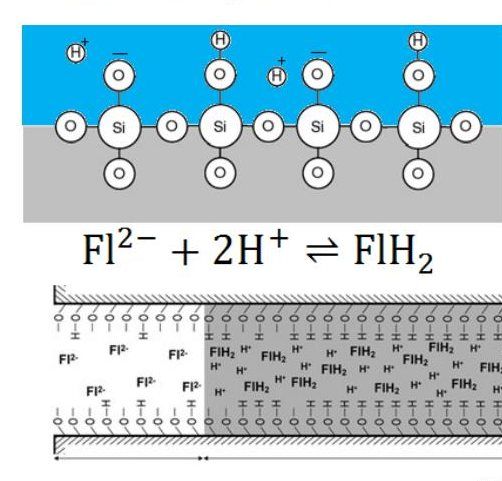
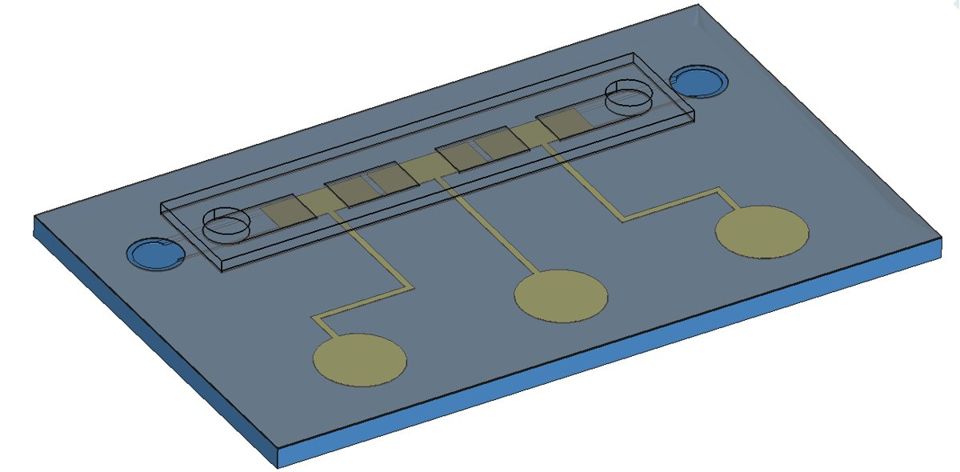
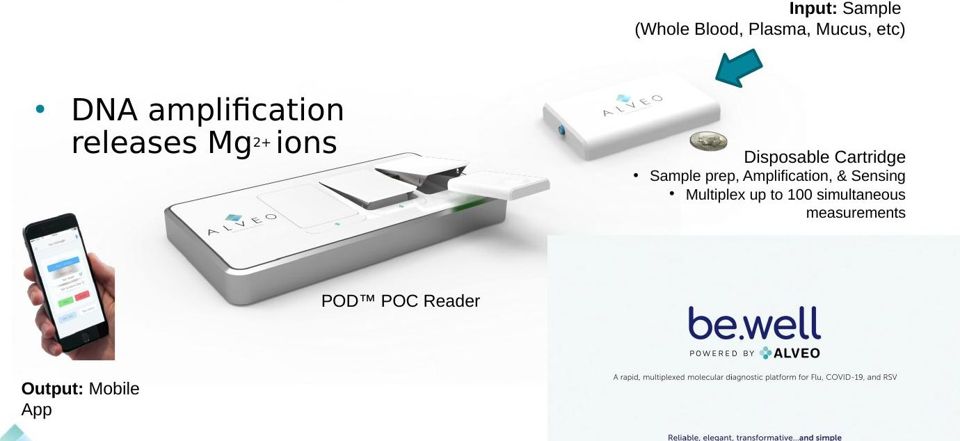
When a channel shrinks to the size of the electric double layer, surface chemistry and electrostatics control how ions and fluid move. We built fluorescence-based methods to measure surface charge inside nanochannels and models that couple silanol surface chemistry with double-layer physics and flow, including density functional theory for ion correlations. This understanding has predicted glass dissolution, enabled a nanofluidic CO2 sensor, and underpinned the DNA amplification sensing technology commercialized by Alveo Technologies.
Nanofluidic Species Transport
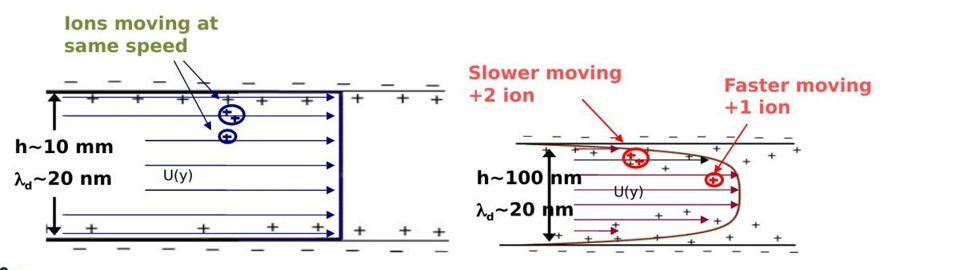
Confinement gives charged molecules new ways to separate. Transverse electric fields and nonuniform velocity profiles in nanochannels create separation mechanisms that do not exist at larger scales. We use them for on-chip stacking, focusing, and preconcentration of analytes, and we control them actively with gate electrodes embedded in the channel walls that tune surface charge on demand.
Bipolar Electrokinetics
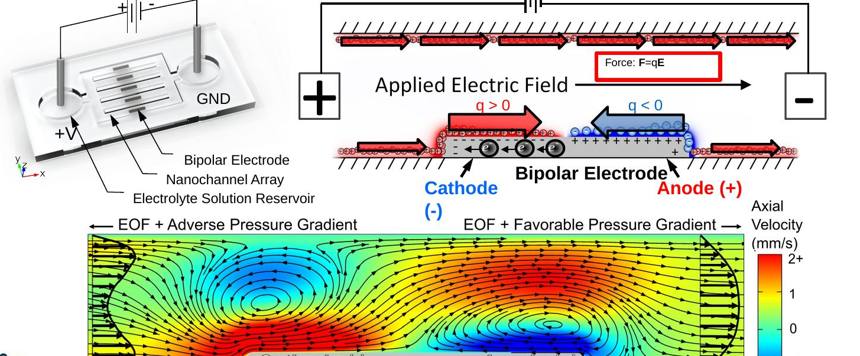
A floating conductor inside a nanochannel becomes a bipolar electrode, coupling electrokinetics to electrochemistry. We combine fluorescence microscopy with highly coupled simulations of Faradaic reactions to show how these electrodes charge, pump fluid through induced-charge electro-osmosis, and discharge with predictable transients that can be used for analysis and detection. The same physics underlies nanofluidic diodes and ion-based (iontronic) computing.
Soft Interfaces
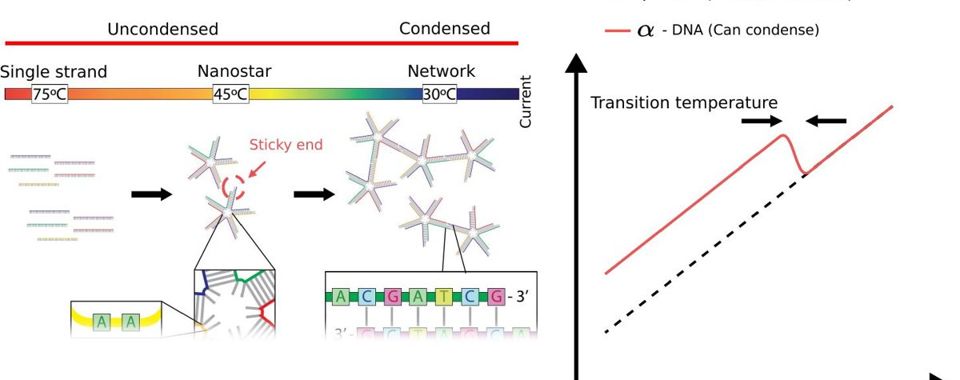
Real interfaces are rarely rigid. We model and measure polyelectrolyte hydrogels, DNA nanostar condensates, and polymer coatings that reshape surface charge, zeta potential, and transport, down to coatings a few nanometers thick. Mixed ionic–electronic conductors such as PEDOT:PSS extend this work, acting as bipolar elements that become measurement tools in their own right.
Electrostatic Actuation
Adding solid mechanics lets us move fluid directly. We design programmable, multistable MEMS electrostatic zipping actuators and an electrostatic zipper pump aimed at more accurate drug delivery, using models, fabrication, and new optical profilometry methods to understand how the membranes deform and pump.
From Lab to Patient
Translation is part of the lab's DNA. Work from our group has led to point-of-care diagnostics (Alveo Technologies), on-body glucose sensing (Laxmi Therapeutic Devices), clinical diagnostics (Asta), and ongoing projects in continuous glucose monitoring and insulin delivery.